
Introduction
Slow cookers have become a staple in kitchens across the country, and for good reason. They offer a convenient way to prepare meals with minimal hands-on time, allowing ingredients to develop deep flavors through extended, gentle cooking. For families or anyone who regularly prepares larger batches of food, a 6-quart capacity slow cooker represents a meaningful step up from standard models.
The West Bend slow cooker we’re exploring here sits in an interesting category—neither the smallest nor the largest option available. It occupies that middle-ground space where many households find genuine utility. Understanding what a 6-quart capacity actually means for your cooking, how the feature set translates to real-world use, and whether this size and style fits your kitchen routine requires more than just a quick glance at specifications.
This article walks through the practical aspects of what this particular slow cooker offers, who might find it most useful, and how it functions within the broader landscape of slow cooking appliances. Whether you’re new to slow cooking or considering an upgrade, getting a clear picture of the features and limitations helps you make an informed decision.
Understanding the Appeal of Larger Capacity Slow Cookers
Before diving into specifics, it’s worth understanding why capacity matters in slow cooker selection. A standard slow cooker typically maxes out around 4 to 5 quarts, which comfortably serves 4 to 6 people with a typical meal. A 6-quart model increases that range to 6 to 8 servings or more, depending on the recipe and portion sizes.
For families with children, people who cook ahead and freeze portions, or anyone hosting regular gatherings, that extra capacity becomes genuinely practical. You’re not making multiple batches or worrying about whether everything will fit. There’s also something to be said for the efficiency of preparing one large batch rather than multiple smaller ones—it saves energy, uses fewer dishes, and takes no more active preparation time than a smaller model.
The manual control style also appeals to a certain segment of users. Digital slow cookers with programmable features have their place, but some people prefer the straightforward nature of a manual machine. There’s less to learn, fewer buttons to worry about, and often a perception of greater durability from fewer electronic components.
Examining the Key Features
Capacity and Dimensions
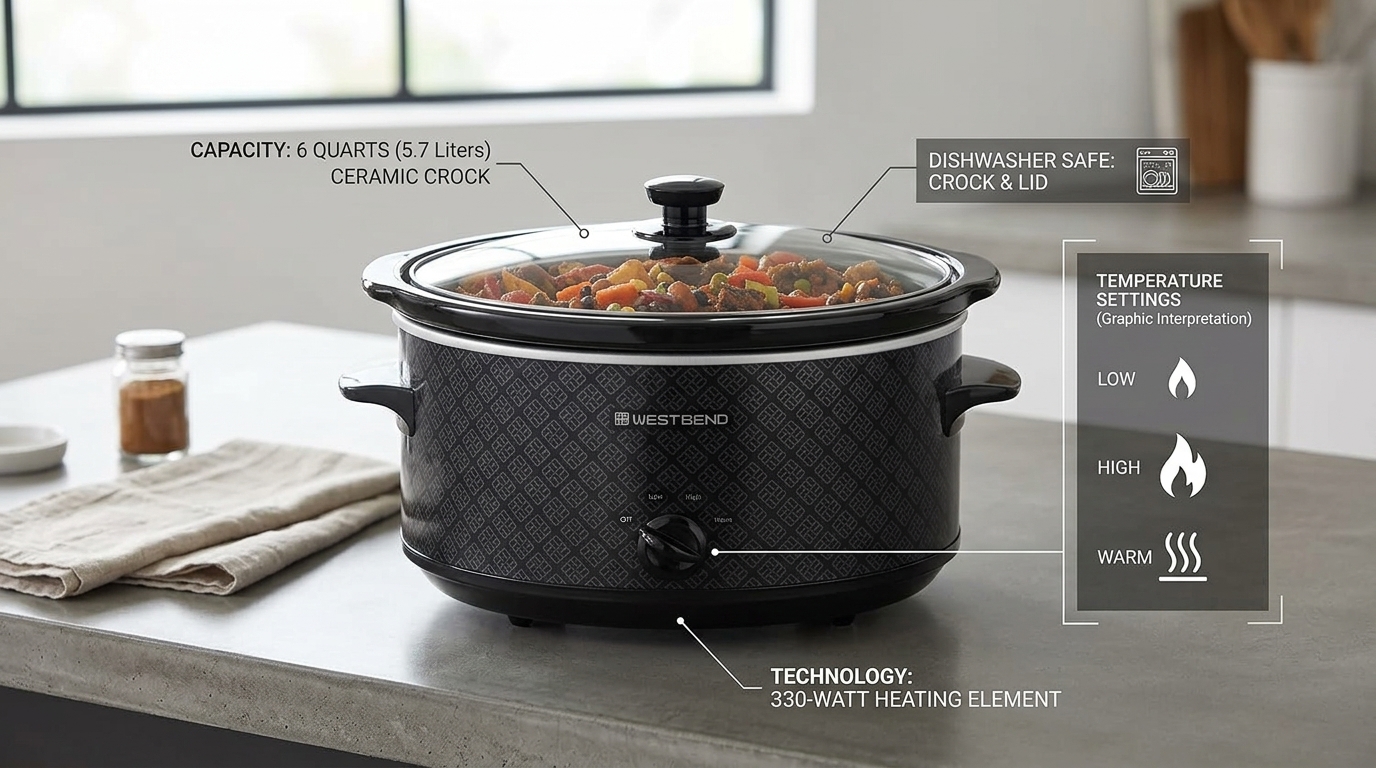
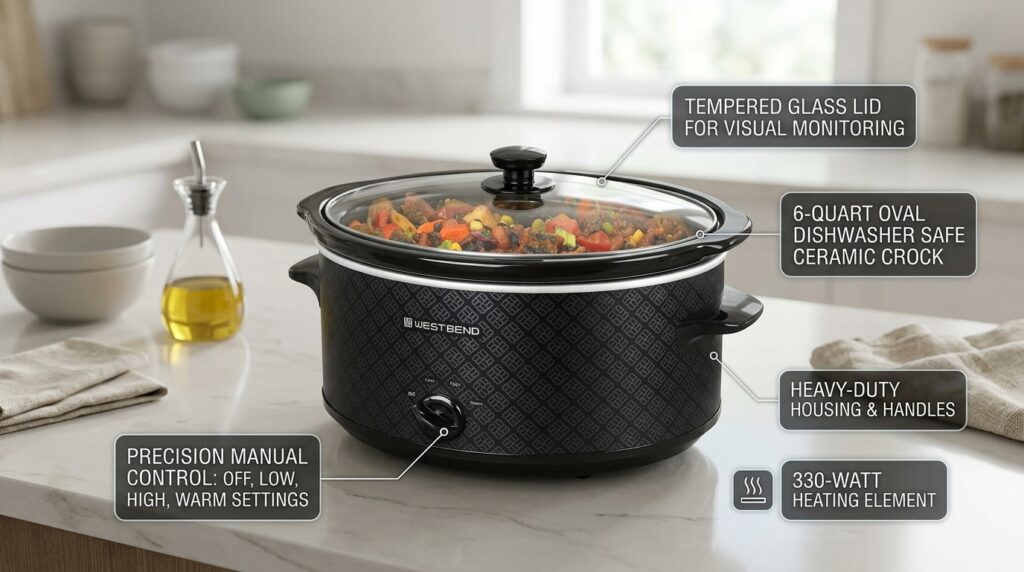
The 6-quart designation is a genuine measurement of volume, and it’s worth understanding what that means practically. This capacity is suitable for roasts, stews, chili, casseroles, and other one-pot meals that serve larger groups. An important distinction here is the oval shape of the ceramic crock. This differs from the traditional round shape found in many slow cookers, and it actually affects cooking patterns and what fits inside.
The oval shape creates distinct advantages for certain cuts of meat. A full-sized pot roast or brisket that might require folding or cutting to fit in a round crock can often sit more naturally in an oval one. This matters because how your ingredients are positioned can influence how evenly they cook.
The Ceramic Crock and Glass Lid
The crockpot itself is made from ceramic, which is standard in slow cooker construction. Ceramic retains and distributes heat evenly, which is why it’s favored over other materials. It’s also durable and has been proven reliable through decades of use in countless kitchens.
The glass lid is a feature worth noting. It allows you to monitor your food without lifting the lid—and lifting the lid during slow cooking adds time to the overall cooking duration since the appliance has to reheat after the lid is removed. A clear view of your ingredients as they cook appeals to many people, both for practical purposes and out of simple curiosity about the cooking process.
Temperature Settings
This model features two temperature settings plus a keep warm function. This is a straightforward approach that contrasts with more complex programmable models. The two-setting design typically offers low and high temperature options. Low settings generally operate around 190-200°F, while high settings run closer to 280-290°F, though exact temperatures vary slightly between models.
The keep warm function is a practical feature that activates after cooking completes. Rather than continuing to cook at high heat and potentially overcooking your food, the keep warm setting maintains the temperature at a level that prevents cooling while keeping the food at a safe serving temperature. This is especially useful if you’re preparing a meal well before everyone will be seated to eat.
Power and Efficiency
The 330-watt power rating is moderate and typical for slow cookers. This wattage is sufficient for gentle, even heating without requiring excessive electricity. For comparison, many household appliances draw considerably more power. Running a slow cooker on low for 8-10 hours doesn’t typically add noticeably to electric bills, making it an economical choice compared to using a conventional oven for extended cooking.
Dishwasher-Safe Components
The ceramic crock and glass lid being dishwasher safe is a genuine convenience factor. Hand-washing large cookware after a meal isn’t impossible, but it’s certainly an additional step. For busy households, this feature removes friction from the cleanup process. The exterior base typically isn’t dishwasher safe and requires gentle hand-washing, which is standard across the industry.
How This Slow Cooker Functions in Daily Cooking
Breakfast Applications
While slow cookers aren’t always the first appliance people think about for breakfast, they’re surprisingly capable. Overnight oatmeal can be prepared by combining oats, milk, and flavorings on low heat, leaving it to cook overnight and waking to a warm breakfast. The large capacity means one batch can provide multiple servings.
Breakfast casseroles work beautifully in larger slow cookers. A 6-quart capacity can accommodate full recipes that combine eggs, cheese, vegetables, and bread or potatoes. These can be assembled the night before and cooked overnight or early morning, ready before your household needs to head out for the day.
Main Course Preparation
The traditional use of slow cookers remains preparing hearty main dishes. Chili, stew, and braise recipes develop their best flavor when ingredients have time to intermingle at gentle heat. A beef stew can simmer for 8 hours, with meat becoming tender and vegetables absorbing the rich, savory liquid. The 6-quart size handles these large batches efficiently.
Roasted chicken, pork shoulder, beef brisket, and similar proteins that require several hours of cooking are well-suited to slow cooking. The oval shape, in particular, accommodates whole chickens or large roasts more effectively than round models. The ceramic crock ensures even heat distribution, preventing hot spots that might overcook exterior portions while interior meat remains underdone.
Batch Cooking and Meal Prep
Many people use slow cookers specifically for preparing multiple portions to freeze. You might cook a large batch of pulled pork, chili, or soup on Sunday, then portion it into containers for weeknight dinners. The 6-quart capacity means you’re creating substantial batches in a single cooking session, which is efficient for this workflow.
This approach appeals especially to parents, people managing dietary goals, or anyone aiming to reduce stress around daily meal preparation. Knowing you have nutritious, home-prepared meals waiting in the freezer changes the weeknight dynamic considerably.
Desserts and Sweet Applications
Though often overlooked, slow cookers can prepare desserts. Chocolate lava cake, bread pudding, and cheesecake can all be made using slow cooker methods. The gentle, consistent heat prevents overcooking, which is important for delicate desserts. The 6-quart capacity means you can prepare multiple servings simultaneously.
Beverage Preparation
Keeping drinks warm during gatherings is a practical application. Mulled wine, spiced cider, or hot punch can simmer in a slow cooker throughout an event, remaining at serving temperature without requiring continuous attention. For holiday gatherings or casual entertaining, this functionality extends beyond the strict definition of cooking.
Who This Slow Cooker May Be Suitable For
Growing or Larger Families
A household of six or more people regularly benefits from 6-quart capacity. Portion sizes typical in family meals mean that a 4-quart slow cooker might not provide enough food for everyone, potentially requiring supplementary dishes or cooking additional batches. A 6-quart model eliminates this compromise, providing a single, comprehensive main dish.
People Who Meal Prep and Batch Cook
If your cooking style involves dedicating time to prepare multiple meals at once, larger capacity proves valuable. The person who cooks every Sunday specifically to have components for the week ahead finds that a 6-quart slow cooker accelerates this process and reduces the number of cooking sessions needed.
Those Who Entertain Regularly
People who frequently host gatherings, whether casual dinner parties or holiday celebrations, often discover that large slow cookers become invaluable. Keeping portions of food warm and ready without last-minute cooking stresses appeals to home entertaining enthusiasts.
Simplicity-Focused Cooks
The manual control approach suits people who prefer straightforward appliances without learning curves. If you’d rather turn a dial than navigate menus and digital displays, this design feels more natural. There’s an appeal to mechanical simplicity that resonates with many people, and this slow cooker delivers exactly that.
People With Limited Oven Space
In smaller kitchens or during times when your oven is at capacity, a slow cooker becomes a parallel cooking solution. You can have a main dish simmering while the oven handles multiple side dishes or desserts, effectively expanding your cooking capacity without adding equipment to your kitchen.
Important Considerations Before Use
Space Requirements
A 6-quart slow cooker occupies meaningful counter space. Before purchasing, measure the area where you intend to place it and confirm that you have adequate room. Unlike smaller appliances that tuck into cabinets, larger slow cookers often remain on the counter for accessibility.
Additionally, consider storage space if you plan to put it away. A 6-quart model takes up notable room in a cabinet or closet, which matters in smaller kitchens where storage is already limited.
Electricity and Heat Management
Like any heating appliance, slow cookers generate warmth. Placing one against a wall or near other heat-sensitive items requires caution. The exterior warms during operation, and adequate air circulation around the unit prevents problems. Clear counter space on all sides is ideal, though reality often requires some compromise.
Learning Your Specific Unit
Every slow cooker has slight variations in heating patterns. Your first few uses should be exploratory—note cooking times and results, and adjust your expectations accordingly. Some units cook slightly faster or slower than their counterparts. Understanding your specific machine’s characteristics means better results over time.
Ingredient Preparation
Slow cookers require different preparation approaches than stovetop or oven cooking. Ingredients don’t brown, layering flavors through searing as they would in traditional cooking. For some recipes, this doesn’t matter. For others, pre-browning meat in a separate pan before adding it to the slow cooker elevates the final result, though it adds an extra step.
Similarly, not all ingredients handle long cooking equally. Delicate vegetables can become mushy if added at the beginning of an 8-hour cooking session. Understanding timing—adding heartier vegetables early and tender ones partway through—improves results.
Liquid Handling
Slow cookers create moisture through gentle, contained cooking. Less liquid evaporates than in traditional cooking methods, which means recipes require less water or broth than you might add to a pot on the stovetop. Following tested slow cooker recipes prevents watery, over-sauced results.
Comparing Slow Cooker Categories and Styles
Manual Versus Programmable Models
Manual slow cookers, like this West Bend model, require your active participation in turning them on and off. You set the temperature and return to switch it off when cooking is complete. Programmable models automatically shift to a keep warm setting after a designated time period, offering more automation.
Manual operation isn’t a drawback if your schedule allows you to be home when cooking completes or when you can switch the setting yourself. For people with variable schedules or those who prefer not to worry about timing, programmable features offer peace of mind. However, programmable models typically cost more and introduce additional electronics that can potentially require repair.
Capacity Considerations Across Options
The 6-quart size occupies the middle ground. Smaller 2-3 quart models work well for individuals or small households but feel limiting for large families. On the opposite end, 7-8 quart slow cookers offer minimal additional capacity but require considerably more counter space. Six quarts represents a practical sweet spot for many households—substantial enough for most cooking needs without being overly large for average kitchens.
Crock Material and Shape
Ceramic crocks, whether round or oval, are standard and proven. Some newer models use stainless steel interiors, which are easier to clean but don’t retain heat quite as evenly. The oval shape, as found in this model, differs from the traditional round. Ovals accommodate elongated cuts of meat more naturally, though round crocks work fine for most recipes.
Heat Distribution Patterns
Different models have variations in heat distribution. Some concentrate heat at the bottom, others around the sides. These differences are subtle but affect cooking patterns slightly. Higher-quality models employ engineering designed to distribute heat more evenly. This West Bend model, at a moderate price point, represents a balance between cost and reliability rather than occupying the absolute top tier of performance.
Maintenance and Care
Daily Cleaning
As mentioned, the dishwasher-safe components simplify routine cleaning. After using, unplug the unit and allow it to cool before removing the ceramic crock and glass lid. The exterior base stays behind and should be wiped with a damp cloth when needed, avoiding excessive water that might seep into electrical components.
Seasonal Maintenance
Slow cookers don’t require complex maintenance. Periodic inspections for visible damage to the cord or casing are wise. If the unit has been stored, a quick visual check before using it again ensures everything appears normal.
Longevity Expectations
Well-maintained slow cookers often last many years. Manual models like this one, with fewer electronic components, potentially outlast more complex programmable versions. Regular use actually tends to keep appliances functioning well, as opposed to extended storage, which can cause issues with dormant components.
Frequently Asked Questions
How long does it take to cook meals in a 6-quart slow cooker?
Cooking times depend on what you’re preparing. Large cuts of meat and hearty stews typically require 8-10 hours on low, or 4-6 hours on high. Smaller cuts or more delicate recipes might need only 4-6 hours on low. Your specific machine’s heating characteristics and the exact size and thickness of ingredients affect precise timing.
Can I use this slow cooker for meal prep?
Yes, many people use 6-quart slow cookers specifically for batch cooking. Preparing a large portion once or twice weekly provides servings for multiple meals. Properly stored in the refrigerator or frozen, these prepared portions simplify weeknight cooking considerably.
What size portion does a 6-quart slow cooker actually serve?
This varies by recipe and portion expectations. A hearty main course like chili or stew typically serves 8-12 people, while a dish with larger individual portions might serve 6-8. Knowing your household’s appetite helps estimate whether a given recipe fills the slow cooker appropriately.
Is manual control or programmable better?
This depends on your lifestyle and preferences. Manual control is simpler and potentially more reliable, but requires your participation in turning the slow cooker on and off. Programmable models offer convenience for people with inconsistent schedules, though they’re more complex and costly.
Can I cook frozen ingredients in a slow cooker?
While slow cookers can cook frozen ingredients, it extends cooking times notably. Most recipes assume thawed, room-temperature ingredients. For food safety and optimal results, thawing meat before slow cooking is generally recommended, though vegetables can often be added frozen without significant issue.
What should I avoid cooking in a slow cooker?
Seafood typically doesn’t work well—the gentle heat and long cooking times tend to overcook delicate fish and shellfish. Dairy products can curdle if added too early in the cooking process, though adding them near the end works fine. Tender vegetables deteriorate if added at the beginning of 8-hour cooking sessions. Learning these patterns through experience improves results.
How much does electricity cost to run a slow cooker?
A 330-watt slow cooker running for 8 hours uses approximately 2.64 kilowatt-hours of electricity. At average electricity rates, this typically costs less than 40 cents, making slow cooking quite economical compared to running your oven for extended periods.
Conclusion
A 6-quart slow cooker represents a practical choice for households seeking to prepare larger portions of food with minimal active cooking time. This particular West Bend model delivers the core functionality that defines slow cookers—steady, gentle heat that develops flavors through extended cooking—in a straightforward manual design without unnecessary complexity.
The oval ceramic crock accommodates various ingredients effectively, the dishwasher-safe components reduce cleanup effort, and the two-temperature settings provide adequate flexibility for different recipes. For families, meal-prep enthusiasts, or people who entertain regularly, the 6-quart capacity offers genuine utility without requiring kitchen modifications or excessive counter space.
Like any appliance, it has limitations and requirements. Understanding how to prepare ingredients, adjust recipes, and work within slow cooking’s particular parameters determines whether you’ll use this appliance consistently or find it sits unused on your counter. The learning curve is minimal—most people develop competency within their first few uses—but recognizing that slow cooking differs fundamentally from traditional cooking methods helps set realistic expectations.
Whether this specific model suits your needs depends on your household size, cooking style, and kitchen setup. If you cook for larger groups, prepare food in batches, or simply appreciate the convenience of minimal-effort meal preparation, exploring the features and functionality outlined here gives you a clear foundation for deciding whether this represents a good fit for your kitchen.