
Introduction
For anyone who regularly cooks for larger households, meal-preps for the week ahead, or hosts gatherings frequently, selecting the right kitchen appliances can significantly impact how you approach cooking. Slow cookers have remained a staple in many kitchens for decades, offering a straightforward method to prepare meals with minimal active cooking time. When it comes to larger-capacity models, specifically the 8-quart programmable varieties with modern features, understanding what these appliances can and cannot do becomes essential before making an investment.
The market for slow cookers has evolved considerably over the years. Modern programmable models offer conveniences that older versions didn’t have, including preset cooking programs, multiple heat settings, and automatic warming capabilities. An 8-quart capacity represents a significant jump from standard slow cookers, which typically range from 4 to 6 quarts. This size expansion opens up new possibilities for how you might approach meal planning and preparation, though it also comes with considerations worth examining thoughtfully.
This article explores the features, practical applications, and important factors to consider when evaluating an 8-quart programmable slow cooker. Rather than making claims about whether any particular product is “best,” we’ll focus on providing information that helps you understand what this type of appliance does, how it functions, and whether it aligns with your cooking needs and lifestyle.
Key Features and What They Mean
Capacity: The 8-Quart Advantage
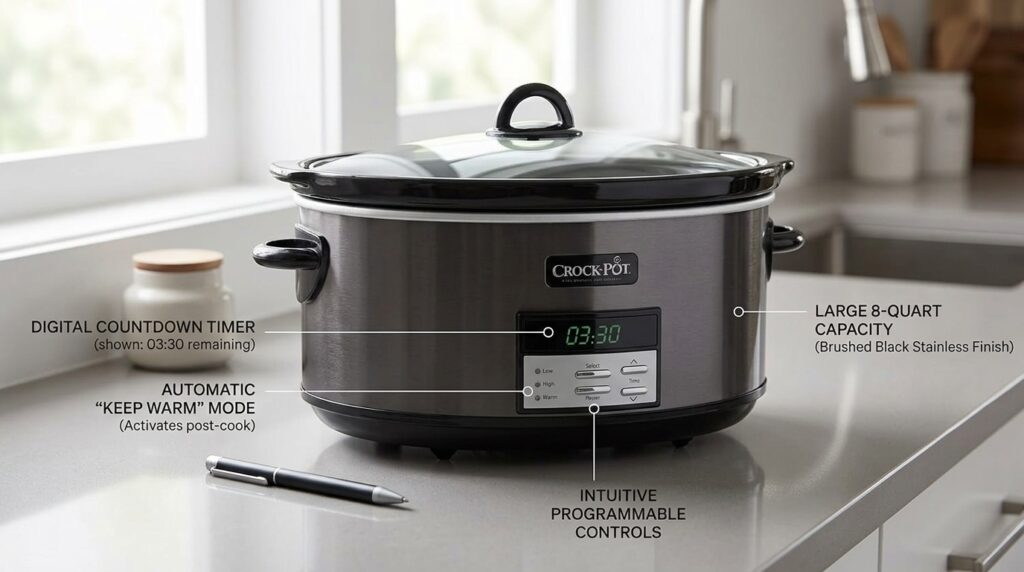
An 8-quart capacity is substantially larger than the standard 6-quart models many people are familiar with. To put this in perspective, 8 quarts equals 32 cups or approximately 7.6 liters. This increased volume means you can simultaneously prepare meals for larger groups, cook multiple dishes at once (provided your model supports it), or prepare substantial portions for freezing and meal prepping.
The practical implications of this capacity deserve consideration. A larger slow cooker doesn’t just mean you can cook more of the same recipe. The ratio of ingredients to surface area changes, which can affect how flavors develop and how quickly food cooks. Generally, when you fill a larger cooker closer to its recommended capacity, the cooking process may take slightly longer than it would in a smaller model because there’s more volume for heat to penetrate throughout.
Programmable Controls and Cook Time Settings
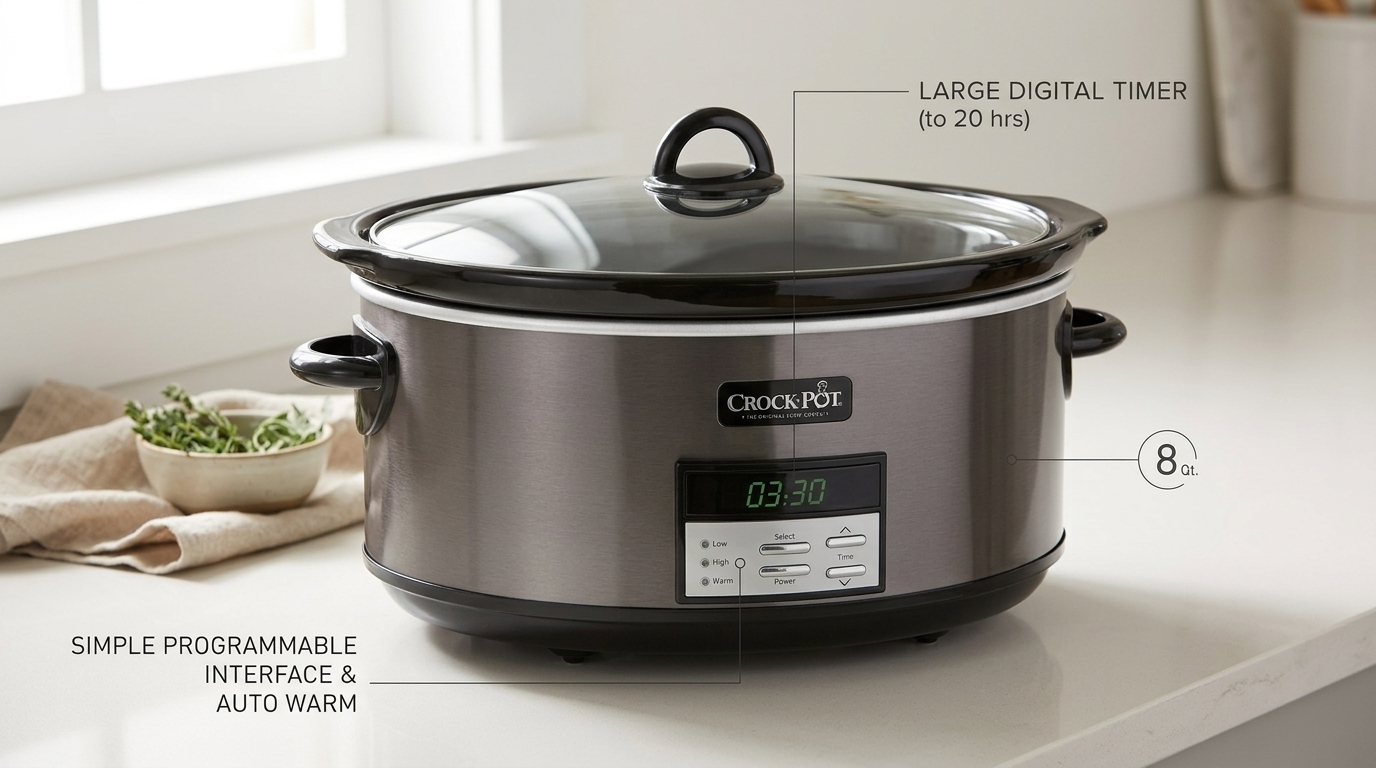
Programmable features represent a significant convenience factor in modern slow cookers. Rather than setting a timer and simply leaving the appliance on low or high heat, programmable models allow you to set specific cooking times before walking away. This means you can schedule your slow cooker to run for a predetermined duration, automatically transition to a warming setting once the cooking time completes, or in some models, use preset programs designed for specific types of dishes.
Having multiple cooking time options matters because different foods require different durations. Tougher cuts of meat might need 8 hours on low, while vegetables could overcook in that timeframe. Programmable controls let you tailor the cooking duration to what you’re preparing. When choosing a slow cooker, reviewing exactly what time increments are available can be helpful—some offer flexible hour-by-hour adjustments, while others work with preset time blocks.
Auto Warm Setting: Convenience and Considerations
An automatic warm setting activates once the programmed cooking time expires. Rather than your food sitting at full temperature after cooking completes, the appliance switches to a warming function that maintains food at a safe temperature without continuing to cook it intensely. This feature extends the window during which you can serve your meal without quality degradation.
However, the auto warm function shouldn’t be viewed as a replacement for proper food storage. If you’re leaving cooked food on the warm setting for several hours before eating, you should understand food safety guidelines. Slow cooker warm settings typically maintain temperatures around 140°F (60°C), which keeps food at a safe temperature according to food safety standards, but it’s not a substitute for refrigerating leftovers promptly.
Heating Elements and Heat Distribution
Most programmable slow cookers use heating elements surrounding the ceramic or stoneware insert. This design allows heat to radiate from the sides and bottom, creating an environment where food cooks gently and gradually. The quality of heat distribution can vary between models, which can affect how evenly food cooks and whether you experience hot spots that cause uneven cooking.
Black stainless steel exterior finishes have become increasingly common in kitchen appliances over the past several years. This finish resists fingerprints and smudges better than traditional stainless steel, which means it requires less frequent wiping to maintain an attractive appearance. The exterior material doesn’t affect how the slow cooker functions but does influence maintenance and aesthetics in your kitchen.
Temperature Control: Low, High, and Sometimes More
Standard slow cookers offer low and high heat settings. Low settings typically maintain temperatures around 190°F (88°C), while high settings reach approximately 300°F (149°C). Some programmable models include additional settings or the ability to adjust temperature precisely. Understanding the temperature ranges available helps you determine whether the model suits the recipes you plan to prepare.
The difference between cooking on low versus high isn’t simply a matter of speed. Cooking on high can cause some ingredients to break down more quickly, potentially resulting in mushier vegetables or less tender results in some cases. Low cooking, by contrast, allows flavors to develop more gradually and can result in more tender meats. Many slow cooker recipes specifically indicate which setting produces optimal results.
Practical Applications and Usage Scenarios
Family Meal Preparation
Perhaps the most common use for an 8-quart slow cooker involves preparing meals for larger families. If you’re cooking for eight to ten people regularly, an 8-quart capacity means you can prepare adequate portions without running two slow cookers or cooking in batches. This is particularly valuable for weeknight dinners where you want the convenience of slow cooking without the coordination challenges of managing multiple appliances.
The extended cooking time in a larger appliance means you should plan ahead slightly. Turning your slow cooker on in the morning to have dinner ready in the evening works well, but you need to account for the full cooking duration from start to finish. For an 8-quart model, this typically means 7 to 9 hours depending on what you’re cooking.
Meal Prepping and Batch Cooking
Larger slow cookers shine when you’re preparing multiple portions for freezing or refrigerating. You might cook a large batch of chili, stew, or soup and portion it into individual containers for future meals. This approach requires less active cooking time than preparing several smaller batches and can be more energy-efficient since you’re using one appliance for an extended period rather than heating multiple smaller cookers.
When batch cooking, ensure your ingredients are fresh and stored properly after cooking. Most slow cooker recipes that freeze well are soups, stews, and braised dishes—categories where the gentle cooking method shines. Dishes with dairy components sometimes need special consideration, as freezing and thawing can affect texture.
Entertaining and Gatherings
When hosting gatherings, slow cookers serve multiple purposes. They can cook the main dish hours before guests arrive, they keep food at an appropriate serving temperature throughout an event, and they free up oven and stovetop space for other preparations. An 8-quart model allows you to prepare substantial quantities of a single dish, simplifying menu planning for events.
For gatherings, the warm setting becomes particularly valuable. You can cook a large batch of pulled pork, meatballs, or another dish in the morning, it stays ready for serving throughout the afternoon or evening, and guests can help themselves as they arrive. This setup reduces stress around timing and allows you to focus on other aspects of hosting.
Slow Cooker Cooking Fundamentals
Slow cooker cooking operates on principles different from traditional stovetop or oven cooking. The sealed environment and gentle heat mean moisture doesn’t evaporate the same way it would in an open pot. This has implications for your recipes and results. Soups and stews work beautifully because the slow cooker’s sealed environment preserves moisture. However, if you’re adapting a traditional recipe to slow cooker cooking, you might need to reduce liquid content since there’s minimal evaporation.
Layering flavors in slow cooker cooking differs from other methods. Browning meat before adding it to a slow cooker isn’t strictly necessary but can add depth to the final dish. Some cooks prefer doing this preliminary step for added flavor development, while others add ingredients directly. Both approaches work; it depends on your preferences and how much time you want to invest in preparation.
Seasonal Considerations
Slow cookers are often associated with autumn and winter cooking, particularly dishes like chili, stew, and roasted meats. However, they work year-round for applications beyond heavy, warming meals. During warmer months, you might use a slow cooker for pulled meats, beans, or dishes you’ll serve cold after cooking.
Running a slow cooker during warm weather does generate heat in your kitchen, which some cooks want to avoid. However, the alternative perspective is that using a slow cooker means your oven and stovetop remain available for other cooking, and the overall ambient heat might be less than using conventional cooking methods.
Who Might Benefit Most
An 8-quart slow cooker suits certain household situations more naturally than others. Families with multiple children, multi-generational households, or anyone regularly cooking for 8+ people finds the capacity genuinely useful rather than occasionally convenient. Frequent entertainers who host gatherings where simple one-pot dishes make sense also benefit from having larger capacity available.
People who meal-prep extensively often find that larger slow cookers accelerate their process. Cooking a single large batch instead of multiple smaller ones saves time and effort. Those interested in bulk cooking for the freezer similarly benefit from the capacity.
Conversely, individuals or couples cooking primarily for two or three people might find an 8-quart model impractical. The appliance takes up considerable counter or storage space, and cooking smaller portions in a larger vessel means ingredients spread more thinly across the bottom, potentially affecting cooking results. For smaller households, 4 or 6-quart models typically make more sense.
People with specific cooking styles or dietary preferences should consider whether slow cooking aligns with their needs. Those who rarely cook with slow cookers or who prefer cooking methods that produce crisped or browned exterior textures might not get regular use from any slow cooker, regardless of size.
Important Considerations Before Purchasing
Counter and Storage Space
An 8-quart slow cooker has substantial dimensions. If you have limited counter space or storage areas, you should measure the appliance to ensure it fits your available space. Some households keep slow cookers permanently on the counter, while others store them in cabinets or pantries when not in use. Both approaches work, but knowing which works for your setup matters.
Cooking Volume and Food Safety
Slow cookers function best when filled appropriately. Most manufacturers recommend filling the crock between halfway and three-quarters full for optimal cooking results. If you consistently fill your slow cooker to capacity but recipes only call for small portions, you might find that cooking results aren’t what you’d hoped. Conversely, if you regularly need the full 8-quart capacity, this size is appropriate for your needs.
Understanding food safety guidelines associated with slow cookers is important. The low, moist heat environment that makes slow cookers effective for cooking also creates conditions where bacteria can grow if food isn’t handled properly. Keeping your slow cooker clean, not adding cold ingredients to a hot appliance, and respecting proper storage timelines for leftovers helps maintain food safety.
Heat and Durability
The insert in a programmable slow cooker undergoes thermal stress from heating and cooling cycles. Over time with regular use, some cracks or chips can develop. Understanding whether replacement inserts are available for your model and how much they cost helps you evaluate long-term value. Some manufacturers offer replacements affordably, while others charge premium prices.
The exterior casing and cord also warrant attention. If you plan to use the slow cooker frequently over many years, durability in these components matters. Reading about longevity experiences from other users of specific models can provide insights into how well various options hold up with extended use.
Noise Level
Programmable slow cookers typically operate quietly, but some models produce occasional sounds from the heating elements or relay switches. If you’re sensitive to appliance noise or if your slow cooker will be running in an open kitchen near your main living space, you might want to research whether any models are known for being particularly quiet or noisy.
Cleaning and Maintenance
Most slow cooker inserts are removable, making cleaning more convenient. Whether the insert can go in the dishwasher versus requiring hand washing influences maintenance effort. The exterior casing generally requires only wiping down with a damp cloth. Understanding the cleaning requirements before purchasing helps you determine whether the model fits your preference for appliance maintenance.
Comparing Slow Cooker Categories
Large Capacity Models (8 Quarts and Above)
Large capacity slow cookers prioritize volume, which makes sense for specific use cases. They’re ideal for households that consistently need substantial quantities and for people who batch cook or entertain frequently. The tradeoff is that they occupy more space and might produce more leftover cooking than smaller households need.
Standard Capacity Models (6 Quarts)
Six-quart models represent a middle ground, offering more capacity than basic models without the significant space requirements of 8-quart versions. Many families find this size strikes a practical balance, providing enough capacity for typical family meals while remaining reasonably compact.
Smaller Capacity Models (4 Quarts)
Compact slow cookers work well for individuals, couples, or small families. They use less counter space and consume slightly less energy. The limitation is that they accommodate smaller recipes and don’t work well for batch cooking or entertaining larger groups.
Programmable Versus Manual Models
Manual slow cookers rely on you to monitor cooking time and temperature adjustments manually. Programmable models handle these functions automatically based on settings you input. Programmable versions offer convenience, particularly if you have unpredictable schedules or can’t check on food at specific intervals. The additional electronics also mean slightly higher cost and potentially more things that could require repair.
Heat Distribution and Construction Differences
Different slow cookers vary in heating element design and construction quality. Some use elements that surround the entire crock, while others concentrate heat primarily at the bottom. This affects how evenly food cooks and whether you need to stir or rotate food during cooking. Premium models sometimes feature more sophisticated heat management.
Frequently Asked Questions
Can you cook on high and low simultaneously?
No. Standard slow cookers operate on a single heat setting at any given time. You choose either low or high, and the appliance maintains that setting for the duration of the cooking time. Some specialty models might offer multiple zones, but typical models function with a single temperature setting per cooking cycle.
What kinds of recipes work best in slow cookers?
Recipes involving tougher cuts of meat, legumes, and vegetables with high water content work particularly well. These include stews, chilis, soups, braised dishes, and slow-cooked roasts. Dishes requiring browning, crisping, or precise temperature control sometimes need adaptation or preliminary steps before slow cooking.
How much liquid should recipes include?
Slow cooker recipes typically include less liquid than traditional stovetop recipes because evaporation is minimal in the sealed environment. Start with amounts specified in recipes designed for slow cookers rather than adapting traditional recipes without considering this factor.
Is browning meat necessary before slow cooking?
No, it’s not necessary. Some cooks prefer browning meat in a skillet first to develop additional flavor, while others add ingredients directly to the slow cooker. Both approaches produce acceptable results; the choice depends on your time availability and flavor preferences.
How long can food safely stay on warm?
Food can remain on warm settings for extended periods, but food safety guidelines suggest not exceeding 4 hours without refrigeration. After cooking completes and you’ve allowed adequate time on warm, refrigerate leftovers promptly to prevent bacterial growth.
Can frozen meat go directly into a slow cooker?
Most slow cooker guidelines recommend thawing meat before cooking for food safety reasons and to ensure even cooking. Adding frozen meat directly extends cooking time and creates conditions where outer portions might reach safe temperatures while inner portions lag, creating potential food safety concerns.
What’s the difference between low and high settings?
Low settings maintain approximately 190°F, while high settings reach around 300°F. Cooking on low generally takes approximately twice as long as high but can result in more tender results. Most recipes indicate which setting to use for optimal results.
Do I need to stir food during cooking?
Most slow cooker recipes don’t require stirring. The gentle, even heat environment typically cooks ingredients uniformly without stirring. Some recipes might benefit from stirring partway through, but it’s usually optional rather than essential.
Can you adjust cooking time if you need to eat earlier or later?
You can shorten cooking time by increasing heat from low to high, though this changes how food cooks. If you need to delay serving, the warm setting extends holding time. These adjustments work within limits; drastically changing cook times from what a recipe specifies can affect results.
What should you do if the insert cracks?
A cracked insert compromises the sealed cooking environment and creates safety concerns. Most manufacturers sell replacement inserts. Continuing to use a cracked insert risks food contamination and uneven cooking.
Conclusion
An 8-quart programmable slow cooker represents a substantial kitchen appliance that serves specific needs well. For larger households, frequent entertainers, or dedicated meal-prep enthusiasts, this size opens up possibilities that smaller models don’t provide. The programmable features and automatic warm setting add convenience, allowing you to set up cooking in the morning and have meals ready throughout the day or evening without monitoring.
However, larger capacity doesn’t automatically mean better. It’s a tool that matches certain lifestyles and cooking situations particularly well. Someone cooking primarily for one or two people, or someone who rarely uses slow cookers, would likely find a smaller model more practical or might not benefit from slow cooking at all.
When evaluating whether this type of appliance makes sense for your situation, consider your household size, how frequently you cook, whether you batch cook or entertain regularly, and how much counter or storage space you can dedicate to the appliance. These factors matter more than any single product feature when determining whether this investment aligns with your actual cooking practices.