
Introduction
Slow cooking has remained a staple cooking method for decades, and for good reason. The concept is elegantly simple: place ingredients in a vessel, apply gentle heat over several hours, and let time do the work. For busy households, this approach solves a fundamental challenge—how to prepare nourishing, homemade meals without spending hours at the stove.
The market offers numerous slow cooker options, ranging from compact 2-quart models ideal for couples to industrial-sized units that feed crowds. In the middle of this spectrum sits the 7-quart capacity range, a size that occupies an interesting position. It’s substantially larger than typical household models, yet compact enough for most kitchen counters and storage spaces.
Understanding whether this size makes sense for your household requires looking beyond marketing language and considering practical factors like your cooking needs, storage space, frequency of entertaining, and household size. This article explores what you should know about large-capacity slow cookers, using the 7-quart manual model as a reference point for this category.
Understanding Slow Cooker Capacity and What It Really Means
Before diving into specifics, it’s worth understanding how capacity relates to actual cooking. A 7-quart slow cooker doesn’t necessarily mean you should fill it completely for every meal. Most manufacturers recommend filling a slow cooker between half and three-quarters full for optimal cooking results. Underfilled cookers may cook unevenly or too quickly, while overstuffed models risk uneven heat distribution.
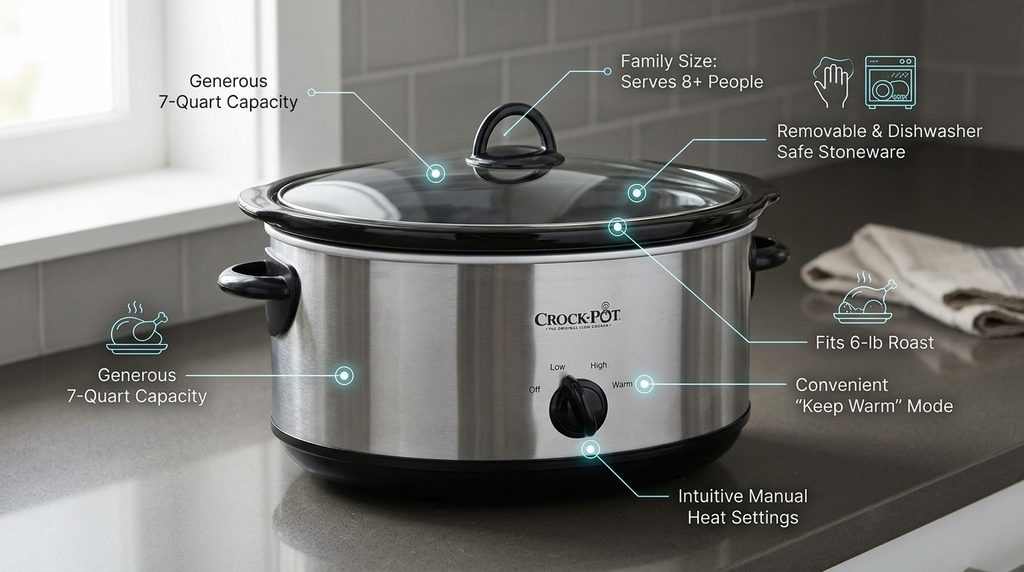
The 7-quart designation suggests the unit can serve anywhere from 8 to 12 people, depending on portion sizes and what else accompanies the meal. For families of four to six, a cooker this size means fewer cooking sessions to feed everyone adequately, or the ability to cook once and have sufficient leftovers for multiple meals.
It’s also worth noting that capacity measurements refer to the internal stoneware vessel, not the entire appliance. The exterior footprint will be noticeably larger than the capacity alone suggests, an important consideration if counter space is already at a premium.
Key Features of Large-Capacity Manual Slow Cookers
The Stoneware Vessel and Its Advantages
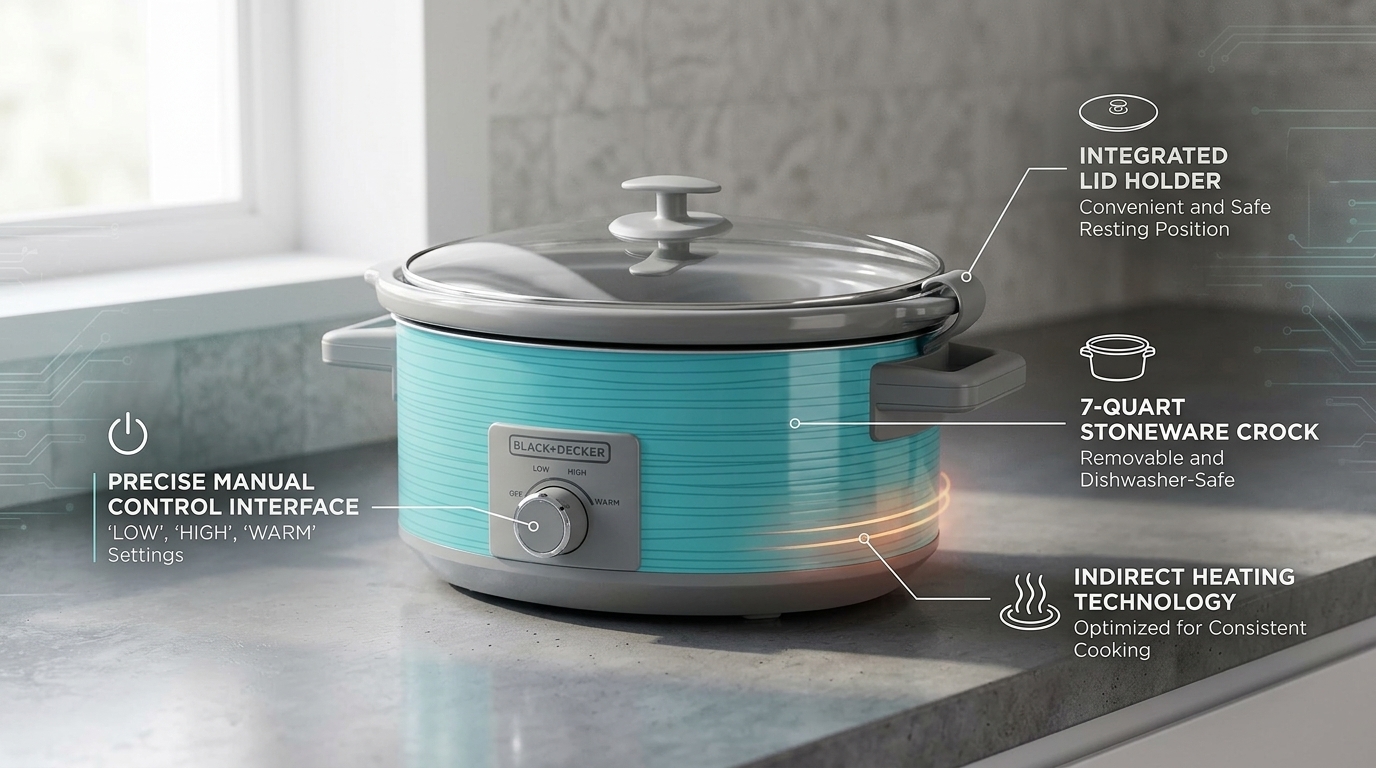
The removable stoneware insert represents one of the most practical features of modern slow cookers. Unlike older ceramic or metal interiors that were fixed in place, removable stoneware offers several advantages.
First, it simplifies cleaning considerably. Once a meal finishes cooking, you can lift out the stoneware insert and wash it separately. Dried-on food residue that might be stubborn to remove from the cooker’s heating base comes off much more easily from a detached vessel. For busy families, this practical benefit often outweighs other considerations.
Second, removable stoneware means you can transfer leftovers directly into the same vessel for refrigeration. Many households store the stoneware container in the fridge, eliminating the need to transfer cooked food to separate storage containers. This reduces cleanup and makes portion management simpler.
Stoneware vessels are also generally more durable than some alternatives. They withstand temperature fluctuations better and resist staining or odor absorption over time. The material naturally distributes heat evenly, contributing to consistent cooking results.
Heating Controls and the Warming Function
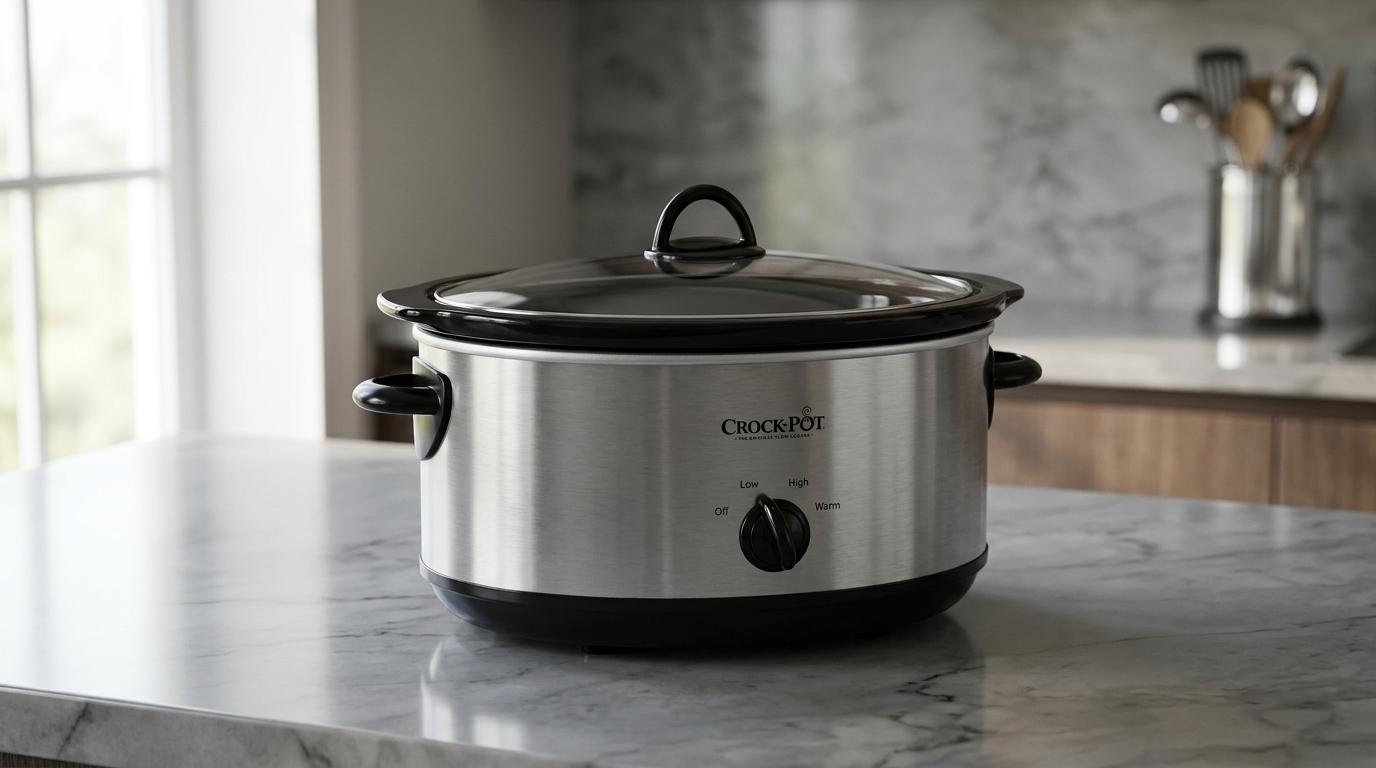
Manual slow cookers operate differently from their programmable counterparts. Instead of digital displays and preset timing functions, manual models feature physical dials or switches. This straightforward approach has its own advantages.
A high and low setting controls cooking temperature. Low settings typically maintain temperatures around 190°F, while high settings run closer to 300°F. The difference affects both cooking time and the intensity of any browning that occurs. Lower settings are gentler and generally recommended for tougher cuts of meat that benefit from extended cooking periods.
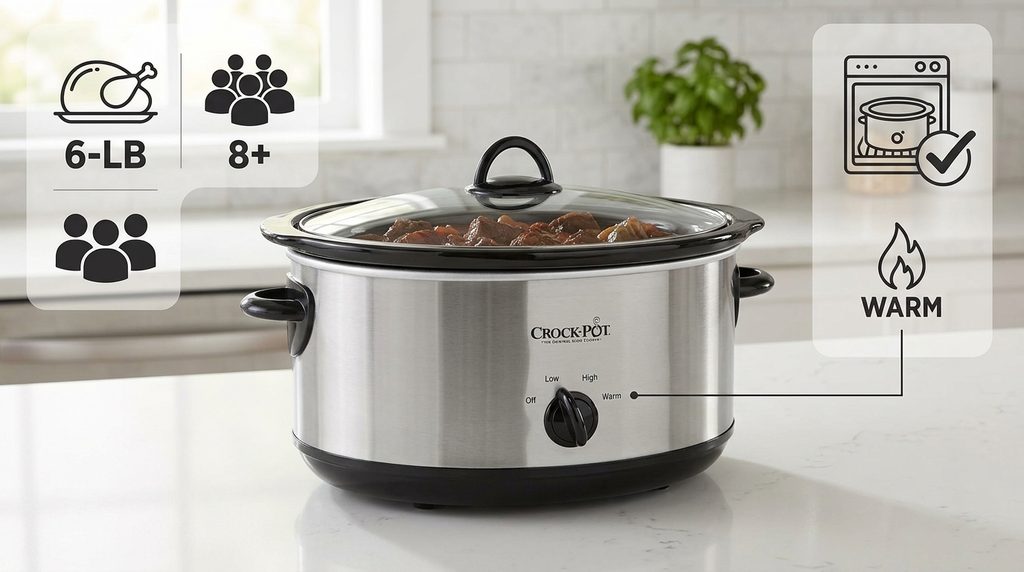
The warming setting, distinct from both low and high, maintains a much lower temperature designed to keep already-cooked food warm without continued cooking. This feature proves valuable when multiple dishes need to finish at different times, or when unexpected delays mean dinner won’t be served on schedule. You can bring food to proper doneness on the low or high setting, then switch to warm for an hour or more without worry about overcooking.
This tiered approach offers flexibility without the complexity of programming or digital displays. There’s something reassuring about the simplicity—no wondering if a timer has been properly set, or frustration if a power outage erases programmed settings.
Stainless Steel Construction
The exterior stainless steel body serves multiple purposes. It provides durability against dents and damage from normal kitchen use. Stainless steel also resists fingerprints better than painted metal finishes, reducing the need for frequent wiping. It fits into various kitchen design aesthetics, from modern to traditional, without looking dated or overly casual.
However, stainless steel isn’t maintenance-free. It requires periodic polishing to maintain its appearance and can show water spots if your tap water is hard. For most households, occasional cleaning with appropriate stainless steel cleaner keeps it looking respectable.
Size and Storage Implications
A 7-quart slow cooker occupies roughly 12-14 inches in length and width, with a height near 10 inches. It’s considerably larger than 4-quart models but significantly smaller than commercial kitchen equipment. This size means it can sit on most standard kitchen counters without appearing to dominate the space.
Storage presents a more complex consideration. Unlike smaller models that might fit in a cabinet, 7-quart units often remain on countertops permanently or require dedicated storage space. Some households use specialized appliance garages or keep them in a pantry, pulling them out only when needed. This works fine if you’re a frequent slow cooker user, but less so if you cook with one occasionally.
How Large-Capacity Slow Cookers Function in Real Kitchens
Meal Planning with Larger Quantities
The jump from 4-quart to 7-quart capacity fundamentally changes how some households approach meal planning. Rather than cooking for one meal and serving four to six people, you’re now producing enough food for eight to ten servings in a single cooking session.
This scale particularly benefits households that embrace batch cooking. Parents of large families often prepare two or three weeks of freezer meals in a single day. A 7-quart slow cooker can handle soups, stews, pulled meat, and similar dishes in quantities that would require multiple cooking sessions in smaller appliances.
The economics shift as well. Bulk meat purchases that seem wasteful for a small household become practical when you can prepare eight to ten servings at once. A 6-pound roast, specifically mentioned in the product specifications, represents the kind of purchase that makes sense for a cooker this size.
Recipe Considerations and Scaling
Not all recipes scale smoothly from 4-quart to 7-quart quantities. While it might seem logical to simply increase ingredient amounts by 75%, cooking time and heat distribution require more nuanced adjustments.
Liquids, in particular, don’t scale proportionally. A recipe designed for a 4-quart cooker might call for two cups of broth. Simply adding 3.5 cups to the same recipe for a 7-quart cooker could result in overly thin final dishes. The larger surface area and different heat distribution patterns mean liquid evaporation behaves differently.
This doesn’t make scaling impossible, but it requires understanding the principles behind recipes rather than mechanically multiplying quantities. Many experienced slow cooker users suggest adding liquids conservatively when scaling up, then adjusting after the first cooking session if needed.
Feeding Varied Appetites and Preferences
Larger capacity cookers accommodate households where preferences and dietary needs vary significantly. You might cook a base recipe and divide it into portions before serving—preparing some with additional hot sauce for those who prefer spice, leaving others mild. This flexibility helps when household members have different dietary approaches, such as some members eating meat while others prefer vegetarian portions.
The warming function also helps when family members eat at different times. A teenager might grab dinner before an evening activity while parents eat later. The warming setting keeps food at a safe temperature without overcooking, creating more flexible meal schedules.
Who Might Benefit Most from a 7-Quart Slow Cooker
Large Families
The most obvious candidate for a large-capacity slow cooker is a household with many people to feed. Families with six or more members, especially those including teenagers with substantial appetites, find that larger cookers reduce the number of cooking sessions needed or provide ample leftovers.
Meal Preparation and Batch Cooking
Food enthusiasts who dedicate a day monthly (or even weekly) to batch cooking find large cookers essential. The ability to prepare eight to ten servings in a single session, then freeze portions for future consumption, transforms the economics of home cooking.
Frequent Entertaining
Hosting dinner for friends or family involves logistical challenges. Coordinating multiple dishes so everything finishes at the right time creates stress. A 7-quart slow cooker shifts some of this burden. You can prepare a main dish in advance, knowing it will hold at the correct temperature on the warming setting, freeing mental and stovetop space for side dishes.
Households with Specific Dietary Approaches
People following certain eating patterns—whether whole food approaches, specific elimination diets, or those who prioritize homemade food—often cook larger quantities. Slow cookers simplify the process of preparing broths, stocks, and base ingredients used across multiple meals.
Multi-Generational Households
Some families include grandparents, adult children, and grandchildren under one roof. The ability to prepare substantial quantities in a single cooking session, with flexibility in portion sizes, makes sense for this living arrangement.
Important Considerations Before Adding a Large-Capacity Cooker to Your Kitchen
Counter Space and Storage Reality
Before purchasing, honestly assess available space. A 7-quart slow cooker left on the counter occupies prime real estate. If your kitchen is already crowded with appliances, or if counters serve as primary workspace, the constant presence might prove frustrating.
Storage in cabinets or closets works if you use it regularly enough that pulling it out monthly makes sense. However, if you reach for it only once or twice yearly, regular storage and retrieval might feel like more trouble than the appliance is worth.
Actual Household Cooking Patterns
The capacity only matters if you actually cook with it. Purchasing a 7-quart slow cooker because you might batch cook, or because you host dinner parties occasionally, represents a different situation than buying one because you cook with a slow cooker multiple times weekly.
Reflect on your actual cooking habits over the past year. How often did you use a slow cooker? Did you ever feel limited by capacity? This honest assessment provides better guidance than imagining potential future use.
Electrical Considerations
Large slow cookers use more electrical current than smaller models. Most plug into standard 120-volt outlets and shouldn’t require dedicated circuits, but in kitchens already operating near maximum electrical load, adding a large appliance might trigger breaker issues. If you live in an older house with limited electrical capacity, this becomes worth considering.
Cooking Time Adjustments
Larger cookers don’t always cook proportionally faster than smaller ones. A 7-quart cooker filled to capacity might take slightly longer to bring ingredients to temperature than a smaller model. This means recipes that took six hours in a 4-quart cooker might take seven or eight hours in a 7-quart version, depending on what you’re cooking.
Maintenance and Longevity
Manual slow cookers are generally simpler and potentially more durable than digital models with electronic components. However, stoneware vessels can crack if subjected to extreme temperature changes or dropped. Over years of use, the heating element might eventually need replacement, though this is often more affordable than replacing an entire digital unit.
Comparing Slow Cooker Options: Understanding Your Choices
Manual Versus Programmable Models
Manual slow cookers require you to turn them on and typically monitor cooking time. You set the temperature and check progress periodically, making adjustments if needed.
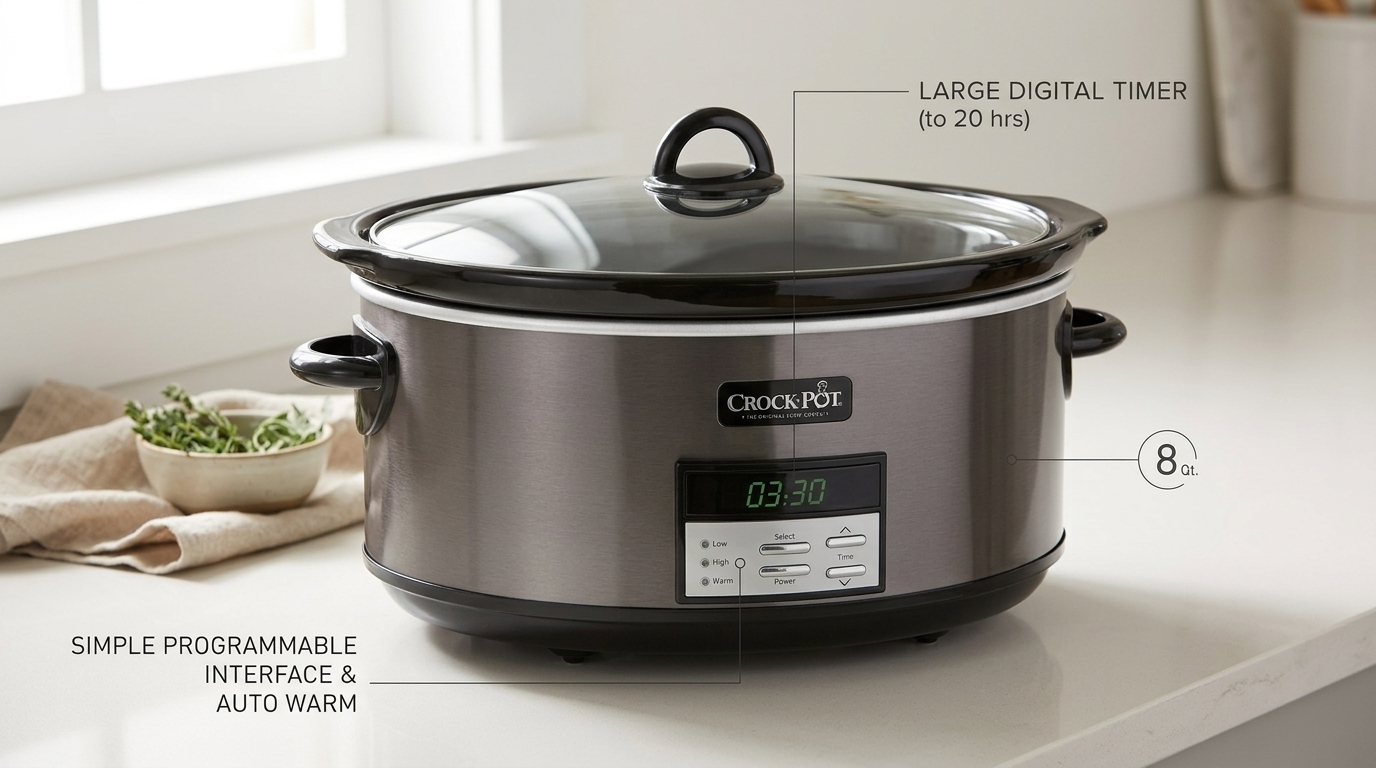
Programmable models feature digital displays and timers. You set cooking time and temperature, and the cooker automatically switches to warming when the timer completes. The convenience factor is significant if you leave food cooking while you work and prefer knowing it won’t overcook.
Manual models offer simplicity, lower cost, and arguably greater reliability due to fewer electronic components. Programmable models offer convenience and automation. Neither is objectively superior—the better choice depends on your workflow.
Capacity Considerations
Beyond the 7-quart range, options include:
- 2-3 quart models: Ideal for couples or individuals. Compact enough for any kitchen. Requires multiple batches to feed large groups.
- 4-5 quart models: The most popular size. Handles family meals and some entertaining without requiring substantial space.
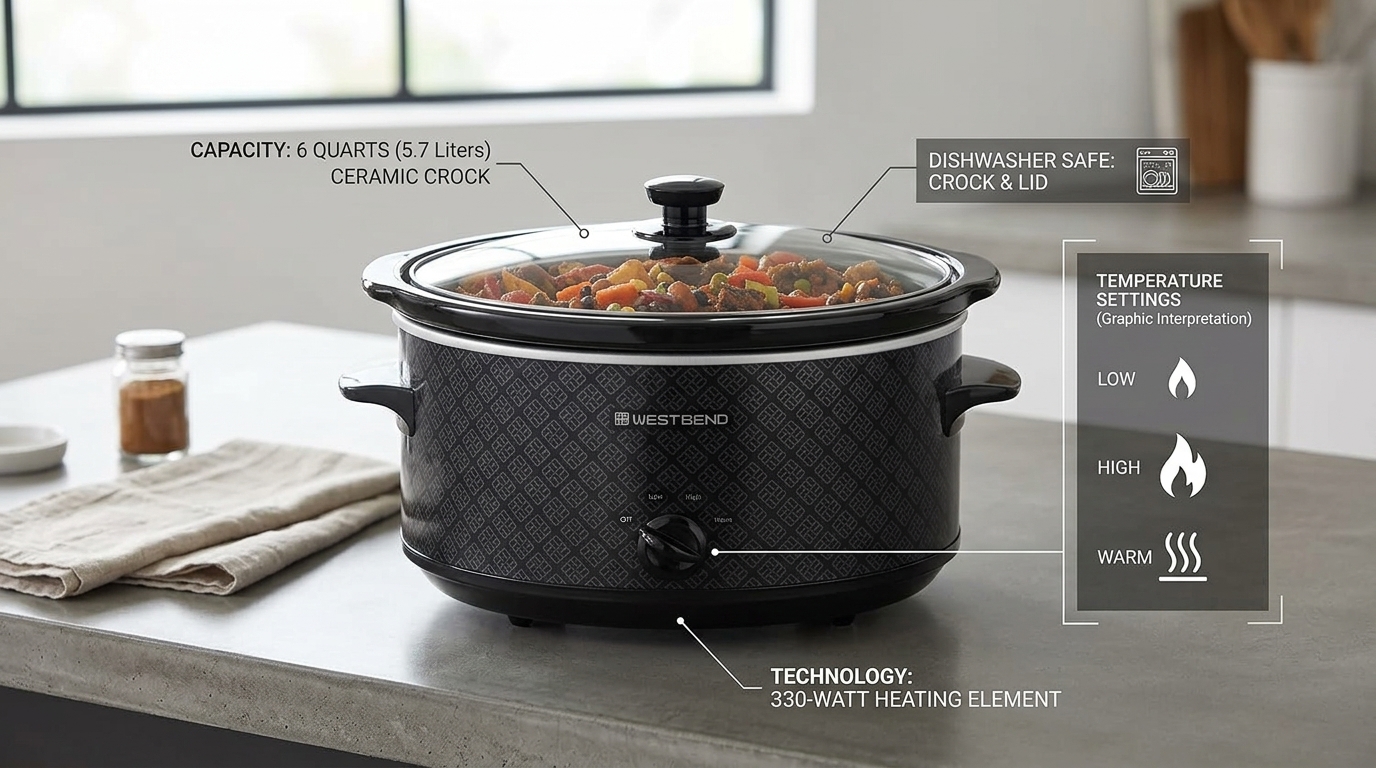
- 6-8 quart models: This range serves larger groups or enables meaningful batch cooking. Requires dedicated storage or counter space.
- 10+ quart commercial models: Used by catering operations or very large households. Mostly impractical for home kitchens.
The 7-quart size lands in a practical sweet spot for many households—larger than typical home models but still manageable for kitchen environments.
Material Choices
Modern slow cookers predominantly feature stoneware or ceramic removable inserts. Some budget models use metal liners, which conduct heat differently and often don’t include the convenience factor of removable vessels.
Exterior materials vary between painted metal (budget-friendly, can show wear), stainless steel (more durable, better looking, requires periodic polishing), and plastic components (keep costs low but feel less substantial).
Answering Common Questions About Large Slow Cookers
How much counter space does a 7-quart slow cooker actually require?
Expect approximately 12-14 inches of width and depth, with a height around 10 inches. This is roughly equivalent to a toaster oven. If you can fit a microwave, you can fit a large slow cooker, though you might not want both occupying counter space simultaneously.
Can you cook smaller portions in a large slow cooker, or does food burn?
Yes, you can cook smaller portions. The cooking might be slightly faster than normal, but it won’t burn if you include adequate liquid and use appropriate low or high settings. Many households with 7-quart cookers use them with a variety of portion sizes, from half-full to completely full.
How long do manual slow cookers typically last?
With normal use, a well-maintained manual slow cooker often lasts 5-10 years or longer. The stoneware insert might eventually crack and require replacement, which is usually affordable. The heating element might eventually need service, but the simplicity of manual models means fewer components to fail compared to digital units.
What’s the learning curve for using a large slow cooker?
It’s quite minimal. Most people adapt to new-sized cookers within one or two cooking sessions. Adjustments primarily involve modifying liquid quantities and cooking times, which most experienced cooks handle intuitively.
Can you sear meat directly in the slow cooker?
Most slow cooker stoneware shouldn’t be exposed to direct high heat before the cooker is turned on. However, many cooks brown meat in a separate skillet, then transfer it to the slow cooker. This extra step improves flavor significantly and many find it worthwhile.
Is the warming setting safe for extended periods?
Yes, the warming setting maintains food at a safe temperature (above 140°F) indefinitely, provided the food was properly cooked beforehand. USDA guidelines support this approach, as the temperature is hot enough to prevent bacterial growth in properly prepared foods.
How does cooking time change in a 7-quart cooker?
Cooking time might increase by an hour or more compared to smaller cookers, depending on what you’re making. A roast that cooks in six hours in a 4-quart cooker might take seven or eight in a 7-quart model. The larger mass of ingredients requires slightly longer to heat through completely.
Practical Tips for Getting the Most from Your Slow Cooker
Whether you’re new to larger-capacity cooking or adding one to your existing kitchen appliances, certain practices improve results.
Layer ingredients strategically. Place harder vegetables like root vegetables on the bottom and sides where heat is most intense. Tender vegetables and herbs go toward the top. Protein typically sits in the middle or bottom of the stack.
Respect liquid ratios. Slow cookers capture moisture and create lots of steam. Recipes often use less liquid than traditional cooking methods. When scaling recipes up, add liquid conservatively and adjust after one cooking session.
Thicken at the end rather than the beginning. If a finished dish is too thin, use a cornstarch slurry or remove the lid for the last 30 minutes of cooking to allow some evaporation. Adding thickening agents at the beginning often results in overly thick finished dishes.
Use high for faster cooking, low for better meat tenderness and more time for flavors to develop. High settings work fine for vegetable-heavy or liquid dishes. Low settings excel for tough cuts of meat that benefit from extended gentle heating.
Don’t skip browning meat. Taking ten minutes to brown protein in a skillet before adding it to the slow cooker dramatically improves the final flavor through the Maillard reaction. This one step makes a noticeable difference in finished dishes.
Let it rest. For substantial dishes, let them sit for 10-15 minutes after cooking finishes before serving. This allows flavors to settle and makes the dish easier to portion.
The Practical Reality of Large-Capacity Cooking
Owning a 7-quart slow cooker doesn’t transform you into a different cook, but it does expand your options. Some weeks you’ll use it multiple times, leveraging its size to prepare meals efficiently. Other weeks it might sit unused. This variability is normal and doesn’t mean the appliance was a poor choice if you accurately assessed your needs beforehand.
The actual value proposition depends on your household size, cooking frequency, and honest reflection on how you eat. A household that regularly feeds eight people, frequently entertains, or practices batch cooking sees substantial value. A couple who cooks with slow cookers occasionally might find a smaller model more practical.
Large-capacity slow cookers represent a reasonable middle ground between appliance minimalism and full kitchen equipment collections. They’re straightforward to use, require minimal learning, and offer real utility for households that match their capacity to actual cooking patterns.
Conclusion
The 7-quart manual slow cooker sits at an interesting point in the appliance spectrum. It’s substantial enough to enable meaningful batch cooking and feed larger groups without the complexity of programmable digital models. The removable stoneware makes cleaning practical, while the manual controls offer straightforward operation.
Whether this size makes sense for your kitchen depends less on the appliance itself and more on your actual household needs, available space, and cooking patterns. Honest reflection about how often you’d realistically use it, and whether its size aligns with your meal preparation approach, provides better guidance than marketing claims or what others own.
If a 7-quart manual slow cooker aligns with how you actually cook and the space you have available, it represents a practical addition to your kitchen. If you’re uncertain about capacity needs, remember that smaller models offer more flexibility for varied household sizes and cooking frequencies.