
Introduction
Slow cookers have been a kitchen staple for decades, but the concept of a truly portable version that maintains functionality while traveling is relatively newer. The market for portable slow cookers has grown substantially in recent years, driven by the reality that many people now need to prepare meals outside their primary kitchen—whether for potlucks, family gatherings, outdoor events, or simply transporting food to various locations.
The Hamilton Beach Stay or Go Extra Large model represents one approach to solving this practical challenge. With a 10-quart capacity and integrated features designed specifically for transport, this cooker addresses a particular segment of the slow-cooking market. Understanding what this type of appliance offers—and equally important, what it doesn’t—can help you determine whether it aligns with your cooking needs and lifestyle.
This article explores the features, practical applications, and considerations related to this portable slow cooker model, providing context that goes beyond product specifications to help you understand how it might fit into your cooking routine.
Understanding the Portable Slow Cooker Category
Before diving into specifics about any single model, it’s worth understanding what distinguishes portable slow cookers from traditional countertop versions. Portable models prioritize transportability without sacrificing cooking capacity, whereas traditional slow cookers often prioritize counter performance and typically don’t include transport-specific features.
The key differences usually include:
Lid design considerations. Portable slow cookers typically incorporate locking mechanisms or clips to secure the lid during transport. This prevents spills and allows you to move the appliance more confidently, which is especially important if you’re traveling any distance or navigating stairs and hallways.
Handles and grip design. Most portable models feature larger, more ergonomic handles than their stationary counterparts. A portable cooker that’s difficult to carry defeats its own purpose, so handle placement and comfort become genuine design considerations.
Capacity and weight balance. Larger portable models require careful engineering to ensure they’re heavy enough for stability when filled but not so heavy that they become impractical to move. This represents a real design challenge for manufacturers.
Cord management. Some portable models include features like cord wrapping systems or shorter cords to reduce entanglement and make the appliance easier to package and carry.
Key Features of the Hamilton Beach Stay or Go Extra Large Model
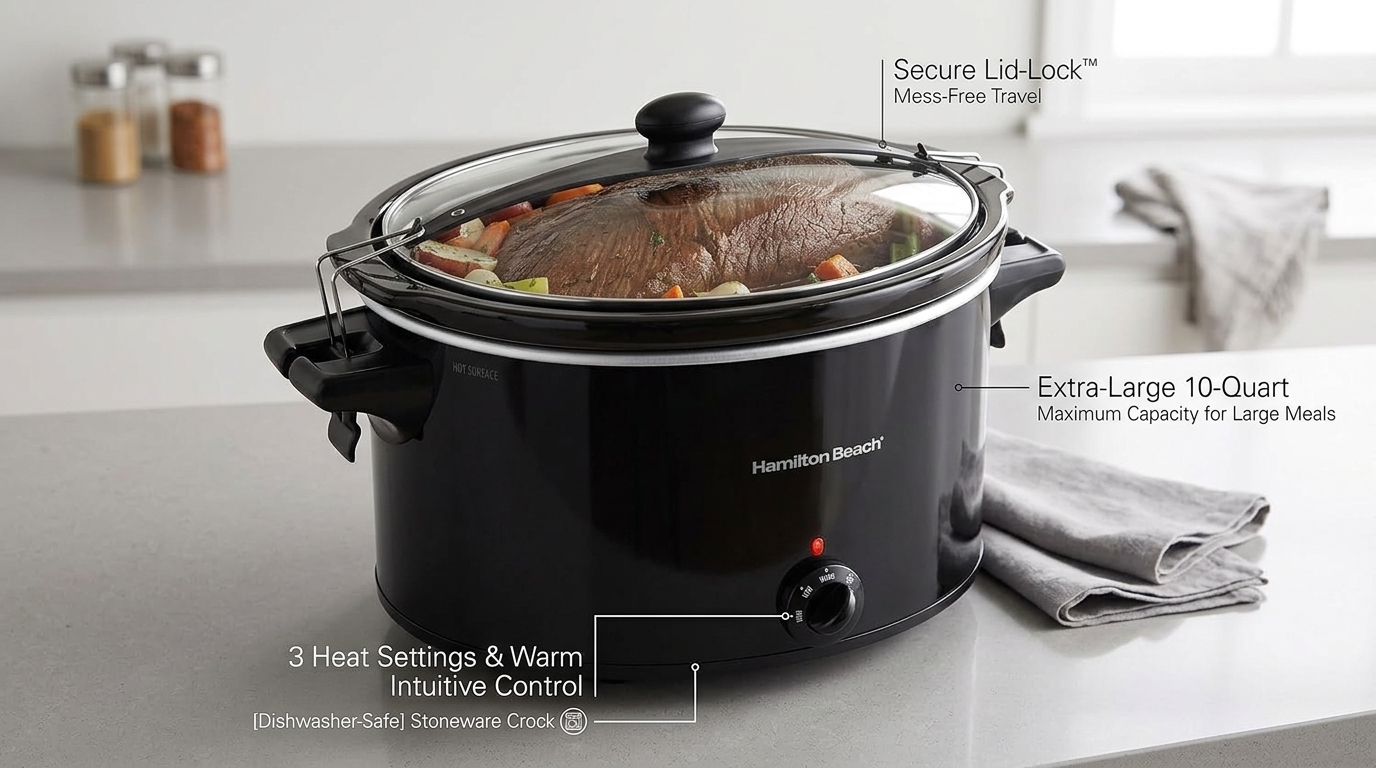
10-Quart Capacity
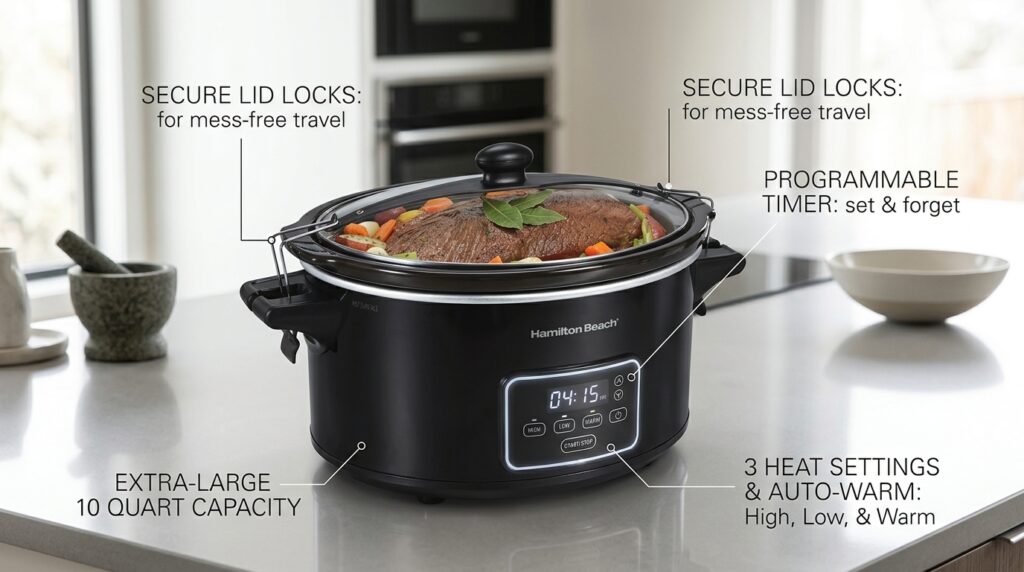
The defining characteristic of this model is its unusually large capacity. At 10 quarts, this slow cooker significantly exceeds the standard 6-quart models that have dominated the market for years. To put this in perspective, 10 quarts equals approximately 2.5 gallons or about 40 cups of liquid.
This size carries both advantages and considerations. The larger capacity means you can prepare substantially more food in a single cooking cycle, which becomes practical if you’re cooking for large groups, preparing multiple dishes, or wanting to make extra portions for freezing. However, larger capacity also means more weight, which affects portability considerations.
Three Heat Settings
This model includes three distinct heat settings, which differs from many basic slow cookers that offer only low and high settings. The three options typically consist of low, medium, and high, though specific temperature ranges vary by manufacturer.
The inclusion of a medium setting provides more granular control over cooking temperature. This matters because different recipes and ingredients often benefit from different heat levels. Tougher cuts of meat might require a longer, lower-temperature cook, while other dishes might achieve better results at higher temperatures over shorter periods. Having this middle option available adds flexibility without complicating the interface.
Lid Lock Feature
The lid lock mechanism is one of the features specifically designed for portability. Rather than simply resting on top, the lid locks into place, preventing it from shifting during transport. This is more than a convenience feature—it directly addresses one of the primary concerns people have about moving food-filled slow cookers.
Anyone who’s transported a full slow cooker understands the anxiety of potential spills. A lid lock mechanism removes much of that concern, allowing you to transport your cooker with greater confidence, even over longer distances or on uneven terrain.
Dishwasher-Safe Stoneware Crock
The interior cooking vessel—the crock—is made from stoneware and is designated as dishwasher-safe. Stoneware is a common material choice for slow cooker interiors because it distributes heat relatively evenly and doesn’t transfer metallic flavors to food. The fact that it’s dishwasher-safe simplifies cleanup, which matters more when you’re cooking somewhere other than your home and might not want to hand-wash a large cooker in unfamiliar conditions.
How Slow Cooking Works
Before discussing specific applications, it helps to understand the basic mechanics of slow cooking. A slow cooker generates heat from the bottom and sides of the cooking vessel, raising the internal temperature gradually and maintaining it at relatively low levels (typically between 180°F and 300°F, depending on the setting).
This low, sustained heat approach differs fundamentally from conventional cooking methods. Rather than using direct, high heat to quickly cook food, slow cooking relies on extended time and moisture retention to tenderize meat, meld flavors, and cook vegetables thoroughly.
The liquid in slow-cooked dishes doesn’t evaporate as readily as it would in conventional cooking because the lid remains sealed. This means that liquids remain in the pot, keeping food moist and contributing to flavor development as ingredients break down slowly over many hours.
Practical Applications and Use Cases
Large Family Gatherings
The 10-quart capacity makes this model particularly practical for family events. Many family dinners, reunions, and holiday gatherings involve preparing food for 15-20 people or more. Rather than using multiple smaller cookers, a single extra-large model might handle a complete dish or two, reducing the number of appliances you need to manage and simplifying your setup.
Consider a scenario where you’re bringing a main dish to a family gathering. A pot roast with vegetables prepared in this cooker could easily provide enough food for a large gathering without requiring anyone to spend hours cooking on-site.
Potluck and Community Events
Potluck contributions often present a transportation challenge. You want to bring food that remains at an appropriate temperature and doesn’t spill during transit. A portable slow cooker with a lid lock accomplishes both goals. You can prepare the dish, secure it with the lid lock, and transport it safely to the event location.
The 10-quart size means you can contribute a more substantial amount of food, which is often appreciated at community events where multiple people bring dishes of varying sizes.
Outdoor Events and Tailgating
For people who attend outdoor events—whether sports tailgates, camping trips, or festival gatherings—a portable slow cooker provides hot food without requiring access to traditional cooking facilities. You can prepare food at home before leaving, keep it at temperature throughout an event, and serve it directly from the cooker.
Some outdoor venues have electricity available, which removes one potential limitation. Even when electricity isn’t available at the event location, you can still transport hot food in the insulated vessel if the cooking is completed before departure.
Catering and Small Events
People who occasionally cater small events or provide food for workplace functions find portable slow cookers valuable. The size allows you to transport complete dishes without worrying about spills, and the slow cooker often serves double duty as both the cooking and serving vessel.
Meal Prep and Batch Cooking
Some home cooks use large slow cookers for batch cooking—preparing large quantities of a single dish to portion and freeze. While this typically happens in the home kitchen, having a larger capacity cooker makes the process more efficient. You can prepare a substantial batch in one cooking cycle rather than running multiple cycles.
Emergency Preparedness
In situations where primary cooking facilities become unavailable—whether due to power outages, renovations, or other disruptions—a slow cooker provides a reliable cooking method if you have access to electricity. The 10-quart capacity means you can prepare enough food to feed a family or group without needing multiple cooking cycles.
Who This Model May Be Suitable For
Large Households
Families with many members often benefit from larger capacity cookers. If you regularly cook for 8-10 people or more, the 10-quart size eliminates the need for multiple cookers.
Frequent Hosts and Entertainer
People who regularly entertain guests, host family gatherings, or bring food to events find portable slow cookers valuable. If this describes your lifestyle, investing in a quality portable model with adequate capacity makes practical sense.
People with Limited Counter Space
This might seem counterintuitive, but if you have limited kitchen space and don’t regularly use a slow cooker at home, a portable model offers an interesting advantage. You store it when not in use, but when you need it—for events, travel, or entertaining—it’s available. Some people prefer this to having a permanent slow cooker taking up counter space.
Catering Professionals
Even professionals who operate small catering businesses or provide food service for local events might find a portable slow cooker model useful for certain applications, particularly for maintaining food temperature during transport and service.
Active Outdoor Enthusiasts
People who camp, tailgate, attend festivals, or participate in other outdoor activities appreciate the ability to bring hot, prepared food to these venues. Combined with adequate electricity access, a portable slow cooker significantly improves meal options during outdoor activities.
Seasonal or Part-Time Cooks
If you primarily use slow cookers during certain seasons or for specific purposes (like during holidays or when entertaining), you might not justify the counter space for a permanent fixture. A portable model stored in a closet or cabinet and brought out as needed works well for this use pattern.
Important Considerations Before Using or Purchasing
Weight and Portability
A 10-quart cooker filled with food weighs considerably more than a 6-quart model. When full, it might weigh 20-30 pounds or more, which affects how portable it truly is. If you have mobility limitations or lack adequate counter space in your destination, this weight becomes more than a technical specification—it becomes a practical limitation.
Cooking Times
Larger cookers sometimes require slightly longer cooking times than smaller models because the thermal mass is greater. Food at the edges might cook before food in the center reaches the proper temperature. If you’re following recipes developed for standard-sized cookers, you might need to adjust timing slightly.
Storage Space
Despite its portability, a 10-quart cooker still requires storage space when not in use. If your home has limited cabinet or closet space, you need to honestly assess whether you have a practical place to keep it.
Heat Setting Variability
While three heat settings provide more control than two, they’re still broader categories than precise temperature control. Different cookers might interpret “medium” slightly differently, and variables like outdoor temperature, humidity, and the starting temperature of ingredients all affect actual cooking temperatures.
Power Cord Length
The cord length determines how far from electrical outlets you can position the cooker. Some portable models include relatively short cords, limiting placement flexibility. Before purchasing, consider whether the cord length works for your intended use locations.
Frequency of Use
The most important consideration is honest assessment of how often you’d actually use the cooker. If you anticipate using it only once or twice annually, a more modest investment might be more practical than a large model that sits in storage most of the year.
Understanding Slow Cooker Heat Settings
The inclusion of three heat settings rather than the standard two provides flexibility worth understanding. Each setting affects not just cooking speed but also the way ingredients break down and flavors develop.
Low Setting
Cooking on low typically maintains an internal temperature around 200°F. This is the most gentle cooking method, taking the longest time to reach doneness. It’s ideal for tougher cuts of meat, long-simmering stews, and dishes where you want maximum tenderization. Many recipes suggest cooking on low for 8-10 hours or more.
Medium Setting
A medium setting usually maintains temperature somewhere between low and high, typically around 250-275°F. This provides a middle ground—faster than low but not as aggressive as high. Medium is practical when you have a shorter time window but still want gentle, even cooking.
High Setting
High settings typically maintain internal temperatures around 300°F or higher. Cooking on high significantly reduces cooking time, often cutting hours of cooking time in half compared to low. However, high heat can sometimes result in less tender results if used for extended periods on very tough ingredients, and there’s increased risk of liquids reducing too much.
The medium option bridges these extremes, making this cooker more versatile than basic two-setting models.
Portability and Transport Features
Beyond the lid lock, several factors affect true portability:
Handle Design and Placement
Handles positioned too close to the center of gravity or too close to the body can make carrying awkward. Well-designed handles are typically positioned slightly back from the center, allowing a balanced grip that doesn’t require excessive arm strength.
Stability When Empty
A portable cooker should sit stably on surfaces without tipping easily, even when empty. This matters when positioning it during transport or when setting it down in unfamiliar spaces.
Weight Distribution
Quality portable slow cookers distribute weight in ways that don’t create strain on the handles or make them feel precarious during transport. The crock shouldn’t shift around inside the exterior, and the overall balance should feel solid.
Lid Locking Mechanism Reliability
The lid lock only provides value if it’s reliable and easy to engage. Mechanisms that are difficult to lock or that loosen during transport defeat their purpose.
Care, Maintenance, and Longevity
Initial Preparation
Most stoneware crocks benefit from seasoning before first use. While the Hamilton Beach model is dishwasher-safe, hand-washing before first use and occasionally using gentle abrasive cleaners can extend the crock’s lifespan.
Regular Cleaning
The advertised dishwasher-safe designation simplifies cleanup, but hand-washing in warm soapy water works equally well. Avoid abrasive scrubbers that might scratch the surface, though stoneware is relatively durable.
Thermal Shock Avoidance
Stoneware can crack if subjected to rapid temperature changes. Never place a hot crock in cold water, and avoid removing the crock from the cooker immediately after cooking and exposing it to cold temperatures.
Storage
Store the cooker with the lid off or slightly ajar to prevent moisture buildup and potential mold development. Clean any spills from the exterior heating element before storing.
Comparing Slow Cooker Sizes
To provide context for the 10-quart size, it helps to understand how it compares to standard options:
Small Cookers (3-4 Quarts)
These are designed for individuals, couples, or very small families. They typically fit on apartment counters and are easy to transport. However, a 3-4 quart capacity means you’d need multiple cookers for larger gatherings.
Standard Cookers (5-7 Quarts)
These remain the most common size, offering a practical balance between capacity and manageability. They work well for families of 4-6 people or small gatherings of 10-12 people if stretching the food with additional sides.
Extra-Large Cookers (8-10+ Quarts)
The Hamilton Beach’s 10-quart capacity puts it in this category. These cookers provide substantially more volume, allowing you to feed larger groups from a single vessel. The tradeoff is increased weight and storage space requirements.
Oval vs. Round
Beyond capacity numbers, the shape affects how food cooks and how easily it fits in different spaces. Oval cookers often fit more efficiently in vehicle trunks and narrow spaces. Round cookers are more common in standard sizes.
Frequently Asked Questions
Can you use this cooker indoors and outdoors?
Yes, provided you have access to electricity. The cooker works anywhere with a standard electrical outlet. Some people use them in kitchens, but also at outdoor events, in RVs, at conference facilities, or anywhere with power.
What types of dishes work best?
Slow cookers excel with dishes that benefit from extended cooking at low temperatures—stews, roasts, soups, pulled meats, and braised vegetables. They’re less ideal for dishes requiring browning or precise temperature control.
How much liquid should you use?
Slow cookers retain moisture more effectively than conventional cooking methods. Most dishes require less liquid than you’d use in traditional cooking—typically just enough to barely cover ingredients or slightly less, depending on the recipe.
Can you leave a slow cooker unattended all day?
Yes, this is one of slow cookers’ primary advantages. You can prepare ingredients, set the cooker, and return home or to your destination hours later to fully cooked food. However, always follow basic safety practices: ensure the cooker is on a stable, heat-resistant surface; keep it away from curtains and flammable materials; and never leave it unattended in unsafe conditions.
Does the 10-quart size cook evenly?
Larger cookers sometimes have minor temperature variations, with edges cooking slightly differently than the center. Stirring occasionally (if the recipe allows) helps promote even cooking.
Is it worth buying a 10-quart cooker if you typically cook for fewer people?
It depends on your specific use patterns. If you only occasionally need that capacity, a standard-sized cooker might be more practical for everyday use, with the 10-quart reserved for special occasions. If you entertain frequently or regularly cook for groups, the larger size makes more sense.
How much cooking time do recipes need?
A general rule suggests that what takes 1 hour at high temperature takes 2-3 hours on medium and 4-8 hours on low. However, these are approximations—specific times depend on ingredient quantities, whether food was preheated, and the exact cooker model.
Can you partially fill it?
Yes, the cooker functions with partial loads. However, cooking times might need slight adjustment because smaller amounts heat and reach serving temperatures more quickly.
Is the stoneware crock durable?
Stoneware is fairly durable, but it can crack with thermal shock or if dropped. Proper care—avoiding rapid temperature changes and careful handling—typically results in years of service.
What’s the difference between the lid lock feature and a regular lid?
A regular lid rests on the cooker with gravity keeping it in place. A locking lid secures with a mechanical mechanism (usually clips or a twist-lock system), preventing any shifting during transport. For stationary kitchen use, a regular lid works fine. For transport, a lock provides valuable security against spills.
Conclusion
The Hamilton Beach Stay or Go Extra Large 10-Quart Portable Slow Cooker addresses a specific need: providing hot, prepared food transportation capability for large groups. The 10-quart capacity, portable design with lid lock features, and dishwasher-safe interior crock represent practical solutions to real challenges people face when entertaining, traveling, or participating in outdoor activities.
Whether this cooker makes sense for your situation depends on several personal factors: the frequency with which you entertain large groups, your available storage space, your typical guest count, and your willingness to manage the additional weight and storage requirements of an extra-large appliance.
For people who regularly transport food for groups, host large gatherings, or participate in outdoor events where hot food access would enhance the experience, a portable slow cooker in this size category offers genuine practical value. For others, a standard-sized cooker might provide better everyday utility.
Understanding the specific features, realistic portability considerations, and practical applications allows you to make a decision based on your actual needs rather than theoretical capabilities.